

The Ultimate Guide to Passing The Trading Pit Challenge 2025: Rules, Strategies & Real Trader Insights
The Trading Pit Challenge is one of the most popular funding programs among the global trading community in 2025. The goal of this challenge is to demonstrate consistent trading performance, discipline, and solid risk management skills — qualities that can earn you a live funded account to trade for the firm.
This article compiles real-world experiences and proven strategies shared by successful traders, helping you better prepare before taking on the challenge.
🧭 1. Understand the Rules – The First and Most Crucial Step
Before thinking about any trading strategy, the first thing every trader must do is fully understand The Trading Pit Challenge rules. Each account tier — such as $50K, $100K, or $250K — comes with its own specific requirements. However, three core parameters remain consistent across all levels:
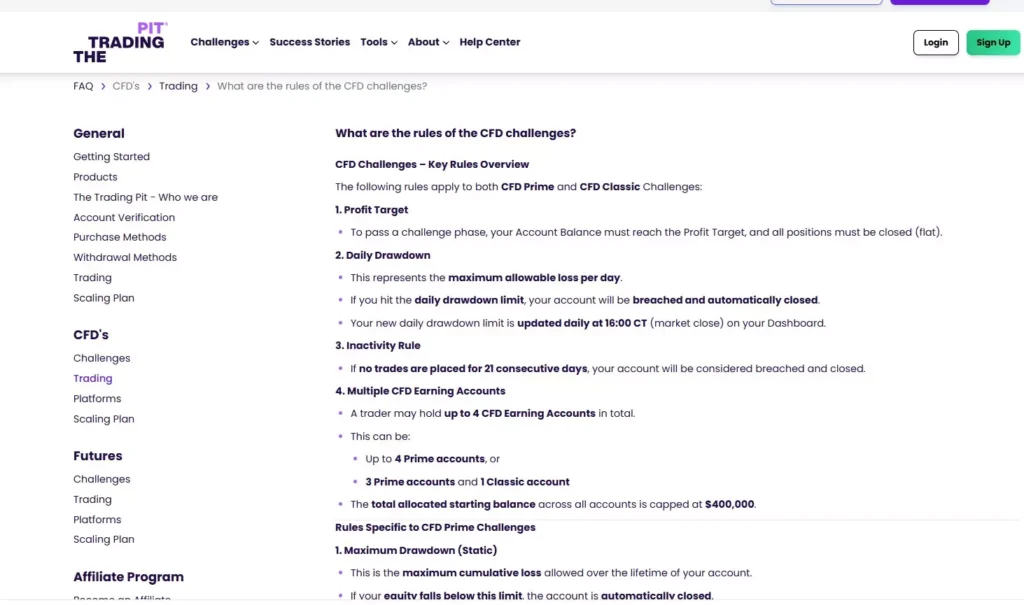
Profit Target: Typically set around 8% to 10%, depending on the specific account type or challenge phase. This is the required profit goal that traders must reach to successfully complete the evaluation stage.
Maximum Drawdown: The overall loss limit that cannot be exceeded at any time. If your account equity or balance falls below this level, the challenge is immediately terminated — regardless of open positions.
Daily Loss Limit: A daily maximum loss threshold designed to protect traders from excessive risk exposure. If the total daily losses exceed this limit, trading for that account phase is considered failed.
💡 Note: The exact percentages may vary depending on the challenge model (e.g., CFD or Futures). Always verify the current figures in The Trading Pit’s official trading rules.
💡 Pro Tip: Take the time to carefully read through the Terms & Conditions on The Trading Pit’s official website and note down all prohibited actions. For example, certain account types may forbid overnight positions or the use of automated trading systems (EAs) during the challenge phase.
Understanding these The Trading Pit Challenge rules not only prevents costly mistakes but also gives you a clear framework to plan your trades strategically. As many funded traders emphasize in community forums like Forex Factory and MyFXBook discussions, discipline starts with respecting the rules — not bending them.
📈 2. Trading Strategy – Simple but Consistent
Traders who successfully pass The Trading Pit Challenge rarely aim for oversized profits. Instead, they focus on a safe, consistent trading approach that emphasizes risk control and emotional discipline. Based on insights shared by funded traders in The Trading Pit Community and other proprietary trading programs, simplicity and consistency often outperform complex, indicator-heavy systems.
Below are several trading styles and approaches that have proven effective for many traders during funding challenges:
1. Price Action with Volume Profile
This approach focuses on identifying key support and resistance levels and observing how price reacts to these zones. As professional trader Al Brooks explains in his Price Action Trading series, analyzing how price behaves around volume clusters can help reveal institutional activity — a crucial factor in spotting short-term reversals and breakouts.
2. Swing Trading on H1–H4 Timeframes
Swing trading allows traders to capture medium-term market moves while avoiding the stress of constant intraday monitoring. This style helps maintain a healthy Risk/Reward ratio (R:R) — typically targeting 1:2 or higher. Many traders featured on MyFXBook and TraderFunding.com confirm that swing setups are well-suited for reaching profit targets within The Trading Pit Challenge’s evaluation period.
3. Trend-Based Scalping
For highly disciplined traders, scalping in the direction of the main market trend can be an efficient and rewarding technique. However, this strategy demands strict emotional control and a clearly defined stop-loss plan. As trading psychologist Dr. Brett Steenbarger emphasizes in The Daily Trading Coach, success in short-term trading depends more on mental resilience than on market prediction.
🎯 Realistic Profit Goals
You don’t need to take excessive risks to pass The Trading Pit Challenge. Setting a modest goal of 0.3%–0.5% profit per day over 20–25 trading days is often enough to achieve the 8% total profit target required for passing the evaluation.
Ultimately, the real question isn’t “What’s the best trading strategy?” — but rather, “Which strategy can you execute consistently without breaking discipline?”
As many funded traders often say:
“Consistency beats brilliance in prop trading.”
Mastering your own The Trading Pit Challenge strategy — one that fits your personality, risk tolerance, and trading schedule — is what truly separates temporary luck from sustainable success.
For accurate and up-to-date challenge conditions, including profit targets, maximum drawdown, and daily loss limits, visit:
🔗 Official Trading Rules – The Trading Pit
💼 Start The Trading Pit Challenge
🧠 3. Risk Management & Psychology – The Factor That Decides 80% of Your Success
Many traders fail The Trading Pit Challenge not because of poor technical skills, but because they lose control over their emotions. As Dr. Alexander Elder famously noted in Trading for a Living, “The biggest mistake in trading is not following your own rules.” Developing a strong The Trading Pit Challenge mindset is what truly separates consistent performers from emotional decision-makers.
Here are a few core principles every trader should follow during the challenge:
- Risk Only 1% Per Trade:
Keeping your risk per position below 1% of your account balance ensures that even a losing streak won’t knock you out of the challenge. This is a principle widely supported by professional prop firm mentors, including those from The Trading Pit Academy. - Limit Positions to 2–3 Trades per Direction Daily:
Overtrading is a silent account killer. Focus on quality over quantity, and remember that one well-planned setup can be more profitable than five impulsive trades. - Stop Trading After Two Consecutive Losses:
This simple rule helps you protect your emotional balance. As trading psychologist Brett Steenbarger explains, “After a sequence of losses, traders often shift from analysis to revenge.” Taking a break prevents emotional bias from escalating further. - Keep a Trading Journal:
Documenting every trade — including entry, exit, and emotional state — allows you to analyze patterns objectively. Over time, your journal becomes your personal roadmap for improvement and accountability.
💬 A popular saying in The Trading Pit community sums it up perfectly:
“You don’t need to be smarter than the market — just calmer than everyone else.”
Building a resilient The Trading Pit Challenge mindset means mastering yourself before mastering the charts. Discipline, self-awareness, and emotional neutrality are the real edge that gets traders funded — and keeps them profitable long after the challenge ends.
🧩 4. A Daily Routine to Maintain Peak Performance
Successful traders often emphasize the power of a structured daily routine. A clear schedule helps you stay consistent, avoid impulsive decisions, and maintain emotional balance — all crucial when taking The Trading Pit Challenge.
Below is an example of a The Trading Pit Challenge routine that many funded traders follow to stay disciplined and focused:
| Time | Activity |
|---|---|
| Early Morning | Analyze the Daily timeframe to identify key trends, support and resistance zones, and overall market bias. |
| Midday | Review upcoming economic news releases and note high-impact events (e.g., NFP, CPI, FOMC) that could affect volatility. |
| Afternoon – Evening | Wait patiently for trade setups that align with your plan. Execute trades with a pre-defined entry, stop-loss, and take-profit. |
| End of Day | Update your trading journal — record performance, psychological state, and key takeaways for improvement. |
Using this structured approach helps you treat trading like a business, not a gamble. As Mark Douglas, author of Trading in the Zone, puts it:
“Consistency comes from a structured mindset, not from a single winning trade.”
⚙️ Recommended Tools for Daily Discipline
To keep your process efficient, consider using a few reliable platforms:
- TradingView: For technical analysis and chart marking.
- MyFXBook: To track performance and risk metrics.
- Notion Journal: For organizing daily trading notes and reflections.
- Forex Factory: To monitor global economic events and sentiment.
A consistent The Trading Pit Challenge routine builds momentum, focus, and psychological stability — three ingredients that separate professionals from amateurs in the prop trading world.
🧩 5. Common Mistakes to Avoid
Even experienced traders can stumble during The Trading Pit Challenge if they underestimate the psychological side of trading. According to prop firm mentors and Trading Pit community members, most failures come from emotional decisions — not lack of technical skill.
Here are the most common The Trading Pit Challenge mistakes you should be aware of:
- Overtrading: Entering too many positions, especially after a win or loss, often leads to emotional trading and unnecessary drawdowns.
- Ignoring Stop-Losses: Failing to respect your stop-loss is one of the fastest ways to violate the challenge’s risk limits.
- Changing Strategies Midway: Switching systems when results fluctuate creates inconsistency. Stick with your tested plan until the phase is complete.
- Not Tracking Daily Drawdown: Keeping a close eye on your daily and overall drawdown protects you from accidental breaches.
💡 Pro Tip: Treat the challenge as a “discipline test,” not a “profit competition.”
When you shift your mindset toward consistency and rule-following, your chances of success increase dramatically.
Avoiding these The Trading Pit Challenge mistakes can mean the difference between failing early and earning a funded account with confidence.
🎯 6. Conclusion
Passing The Trading Pit Challenge 2025 doesn’t require you to be a market genius — it requires you to be disciplined, consistent, and self-aware.
The traders who get funded are the ones who:
- Maintain absolute discipline in every trade,
- Practice intelligent risk management, and
- Have a deep understanding of the funding system they’re operating within.
If you prepare thoroughly, follow your plan, and manage emotions like a professional, obtaining a real funded trading account from The Trading Pit will only be a matter of time.
“Success in trading isn’t about predicting the market — it’s about managing yourself.”
If you’d like to explore more about The Trading Pit and other leading prop trading firms, check out these related articles:
- Is The Trading Pit a Trusted Funding Firm?
- What Is a Prop Firm in 2025 and Why Choose The Trading Pit?
- The Trading Pit vs Blue Guardian – Which Prop Firm Is Better?
- Top Prop Trading Firms to Consider in 2025
❓ FAQ – The Trading Pit Challenge 2025
Everything you need to know before taking on The Trading Pit Challenge this year.
1. How do I start The Trading Pit Challenge?
Register on the official website, choose your Challenge type (CFD, Futures, or Stocks), and purchase your evaluation account. Once you meet all objectives, you’ll receive a live funded trading account.
2. What is the Profit Target?
The profit target is typically 8%–10% depending on your selected account size and type. Always confirm the exact figures on The Trading Pit official rules.
3. What are the Maximum and Daily Drawdown limits?
Daily Drawdown is the maximum amount you can lose in a single day. Maximum Drawdown is the total account loss limit that cannot be exceeded during the Challenge. Violating either rule will immediately end your evaluation.
4. Is there a minimum number of trading days?
Yes. For example, Futures Challenges require at least 3 trading days, while CFD accounts may require 5 days. Check your selected account type for exact rules.
5. Is there a time limit for completing the Challenge?
Some CFD Challenges offer no time limit as long as your account remains active. Futures Challenges may have 30-, 60-, or 90-day durations depending on the plan.
6. Can I trade during news events?
CFD accounts typically restrict trading two minutes before and after major news releases. Futures accounts may have different or more flexible conditions. Always review your Challenge type rules before trading around news.
7. Are automated or copy-trading systems allowed?
High-frequency trading (HFT) and copy-trading are usually prohibited. Some account types restrict Expert Advisors (EAs) or scalping below one-minute trades. Manual trading is recommended to avoid violations.
8. When can I withdraw profits?
Profit payouts vary by account type. For example, Futures Prime accounts allow 80% profit share after a minimum of five profitable trading days. Check the official payout policy for current terms.
9. What happens if I don’t trade for a while?
If no trades are placed for 21 consecutive days, the account is marked inactive and may be closed automatically.
10. What are the most common mistakes that cause Challenge failure?
- Exceeding daily or maximum drawdown limits.
- Trading around restricted news events.
- Using unauthorized bots or copy-trading systems.
- Overtrading or switching strategies mid-Challenge.
- Breaking the “consistency rule” — e.g., making over 40% of total profits in one day.
Pro Tip: Treat the Challenge as a discipline test, not a profit race.
For the most accurate and updated information, always check: 🔗 Official FAQ – The Trading Pit